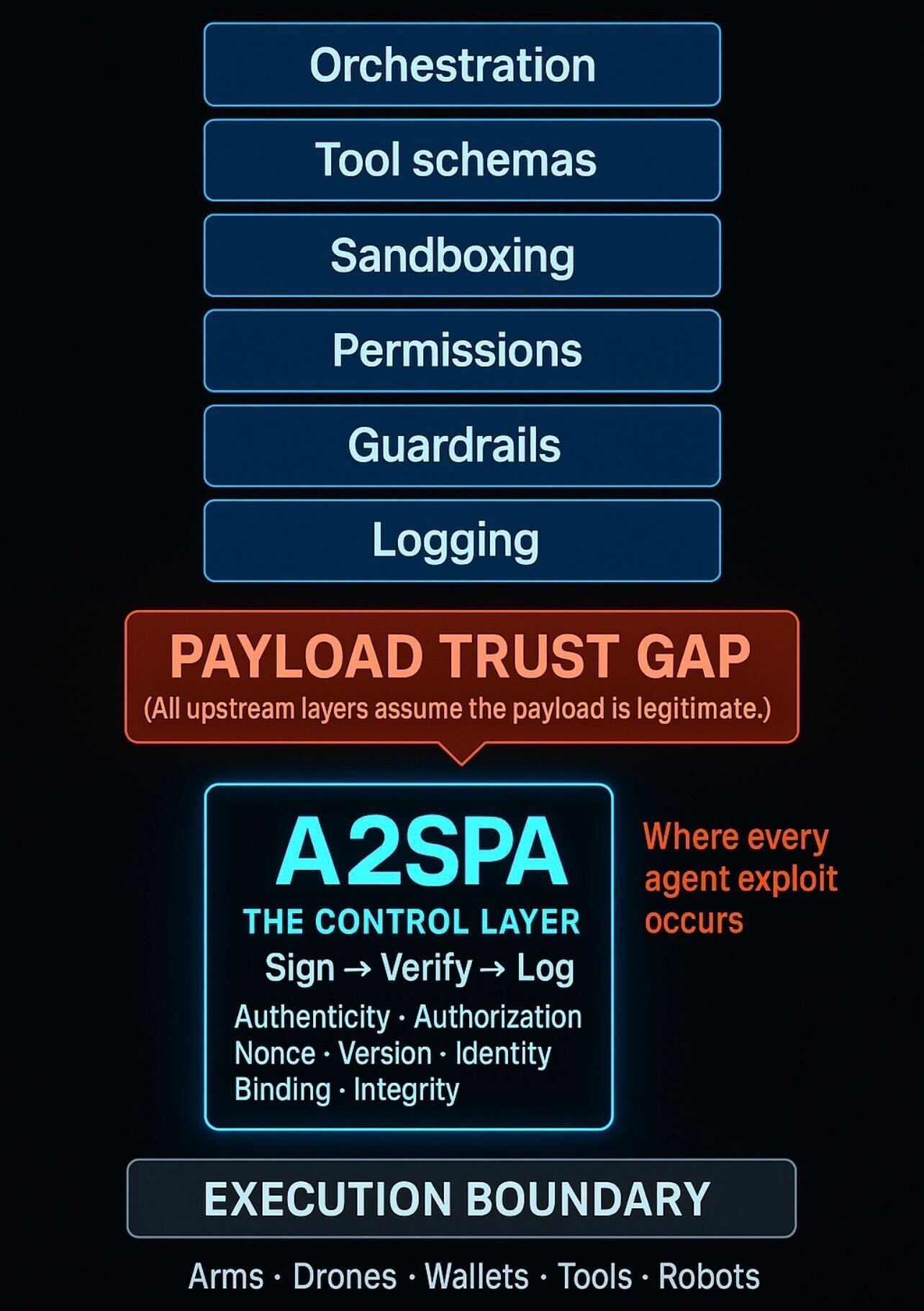
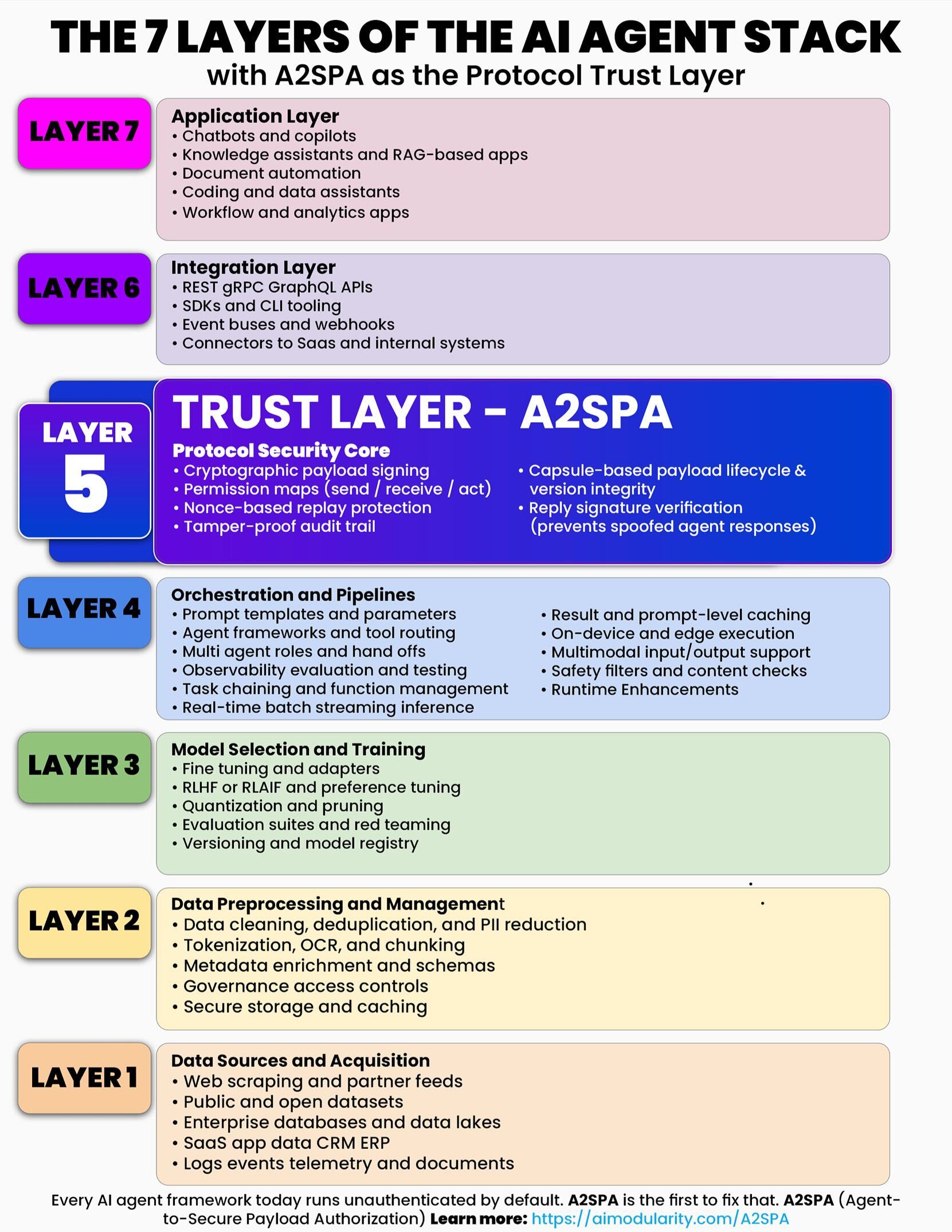
A2SPA 2.0: State-Continuity Verification
A signed authorization at the beginning of a workflow is not enough.
For autonomous systems, the real question is not only:
“Was this action authorized when it started?”
It is:
“Is the state required for this action still true right now, before it continues?”
That is the core of the A2SPA 2.0 checker.
Example:
Agent A initiates a transfer of $100 to Agent B.
The initial request may be properly signed, correctly scoped, and authorized at the execution boundary.
But before Agent B accepts, settles, forwards, or triggers the next step, A2SPA 2.0 checks the live authoritative state:
- Does Agent A still have the $100?
- Is the $100 still available or reserved for this exact transaction?
- Has that amount already been spent, transferred, released, or committed elsewhere?
- Does the authorization remain valid?
- Has the policy, destination, amount, identity, delegation chain, or risk state changed?
- Has the transaction been revoked, expired, replayed, or superseded?
Only if those conditions still match can the workflow continue.
The model is:
Authorize → Reserve/Bind State → Execute Step → Re-check State → Continue or Deny
The checker evaluates a transaction-specific continuity record containing, at minimum:
- transaction/workflow ID
- asset or resource identifier
- amount or scope
- source and destination
- reservation or lock reference
- prior execution receipt
- sequence number
- policy version
- authorization expiry
- nonce / replay status
- revocation status
The checker compares that claimed context against the current system of record.
If the state still matches, it issues a new signed continuation receipt.
If the state no longer matches, the request fails closed.
No continuation. No downstream execution.
This is not generic monitoring or a simple balance check.
It is state-bound continuation authorization:
An autonomous workflow may continue only while the conditions that justified its authority remain provably true.
That matters for payments, inventory, healthcare workflows, logistics, approvals, data access, multi-agent delegation, and any long-running AI process where “authorized once” cannot mean “authorized forever.”
A2SPA 1.0 asks:
Should this execution be admitted right now?
A2SPA 2.0 adds:
Should this already-authorized workflow still be allowed to continue right now?
No signature. No execution.™
No verified state continuity. No continuation.